
The Future of Fat Loss: Building a Healthy Metabolism for Life
For decades, weight loss advice has focused primarily on short-term appearance goals.
But the future of metabolic health is shifting toward something much bigger:
Longevity.
Energy.
Resilience.
Function.
Prevention.
The conversation is evolving from “How do I lose weight fast?” to:
“How do I build a healthier metabolism for life?”
That is a far more powerful question.
A Healthy Metabolism Is About More Than Body Weight
Metabolic health affects nearly every system in the body.

It influences:
- Energy production
- Brain function
- Hormones
- Cardiovascular health
- Inflammation
- Blood sugar regulation
- Mobility
- Aging
- Disease risk
This is why sustainable fat loss should focus on improving metabolic function — not simply reducing scale weight.
The Goal Is Metabolic Flexibility
A healthy metabolism can efficiently switch between fuel sources and maintain stable energy regulation.

This is sometimes called metabolic flexibility.
Characteristics of better metabolic health may include:
- Stable blood sugar
- Better energy
- Reduced cravings
- Improved insulin sensitivity
- Healthy muscle mass
- Better recovery
- Reduced visceral fat
- Improved endurance
These improvements often matter more than rapid short-term weight changes.
Muscle Becomes More Important With Age
As humans age, muscle mass naturally declines.
This process affects:
- Mobility
- Strength
- Blood sugar control
- Metabolic rate
- Independence
- Longevity
This is why modern fat loss strategies increasingly emphasize:

- Strength training
- Protein intake
- Functional movement
- Recovery
Healthy aging and metabolic health are deeply connected.
Nutrition Should Support the Entire System
The most effective long-term nutrition strategies are often:
- Sustainable
- Nutrient-dense
- Fiber-rich
- Protein-centered
- Minimally processed
The goal is not perfection.
The goal is creating eating patterns that support long-term metabolic stability.
Movement Is a Biological Requirement
Exercise is not merely a tool for burning calories.
Movement affects:
- Insulin sensitivity
- Mitochondrial health
- Brain function
- Mood
- Inflammation
- Longevity
Humans are biologically designed to move regularly.
Even simple daily walking has profound metabolic benefits.

Prevention Is the Future of Medicine
Many chronic diseases share common metabolic roots:
- Type 2 diabetes
- Cardiovascular disease
- Fatty liver disease
- Cognitive decline
- Obesity-related inflammation
Improving metabolic health early may reduce long-term disease risk dramatically.
This is why preventive medicine increasingly focuses on:
- Blood sugar regulation
- Sleep
- Nutrition
- Movement
- Stress reduction
- Lifestyle medicine
Sustainable Habits Beat Short-Term Extremes
The healthiest transformations usually emerge from consistency.
Small habits repeated daily often outperform extreme programs that cannot be maintained.
Examples include:
- Walking after meals
- Eating more protein
- Sleeping consistently
- Strength training 2–4 times weekly
- Reducing ultra-processed foods
- Managing stress
- Building supportive environments
Long-term health is often built through repetition, not intensity.
The Future Is Systems-Based Metabolic Health
The future of fat loss is moving toward integrated systems medicine.
Instead of isolated dieting tactics, the focus is becoming:

- Hormonal health
- Circadian biology
- Recovery
- Muscle preservation
- Personalized nutrition
- Inflammation reduction
- Nervous system regulation
- Long-term resilience
This approach recognizes that metabolism is interconnected with the entire human organism.
Final Thought
Sustainable fat loss is not about punishing the body into submission.
It is about restoring biological balance.
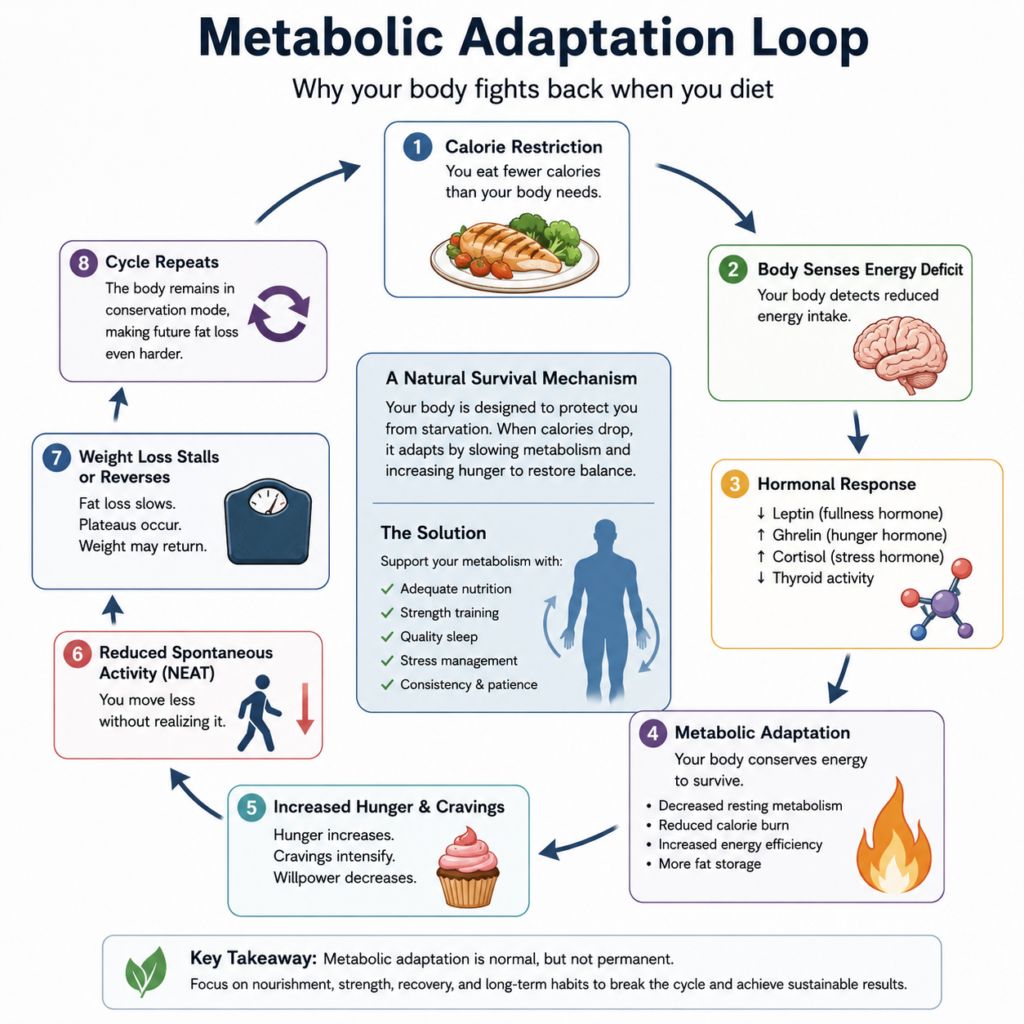
When sleep improves, movement increases, nutrition stabilizes, stress decreases, and muscle strengthens, metabolism often responds naturally.
The real goal is not simply to lose weight.
The real goal is to build a healthier, stronger, more resilient human being for decades to come.
Evidence-Based Resources for Health and metabolism Wellness