
The Gut–Metabolism Connection
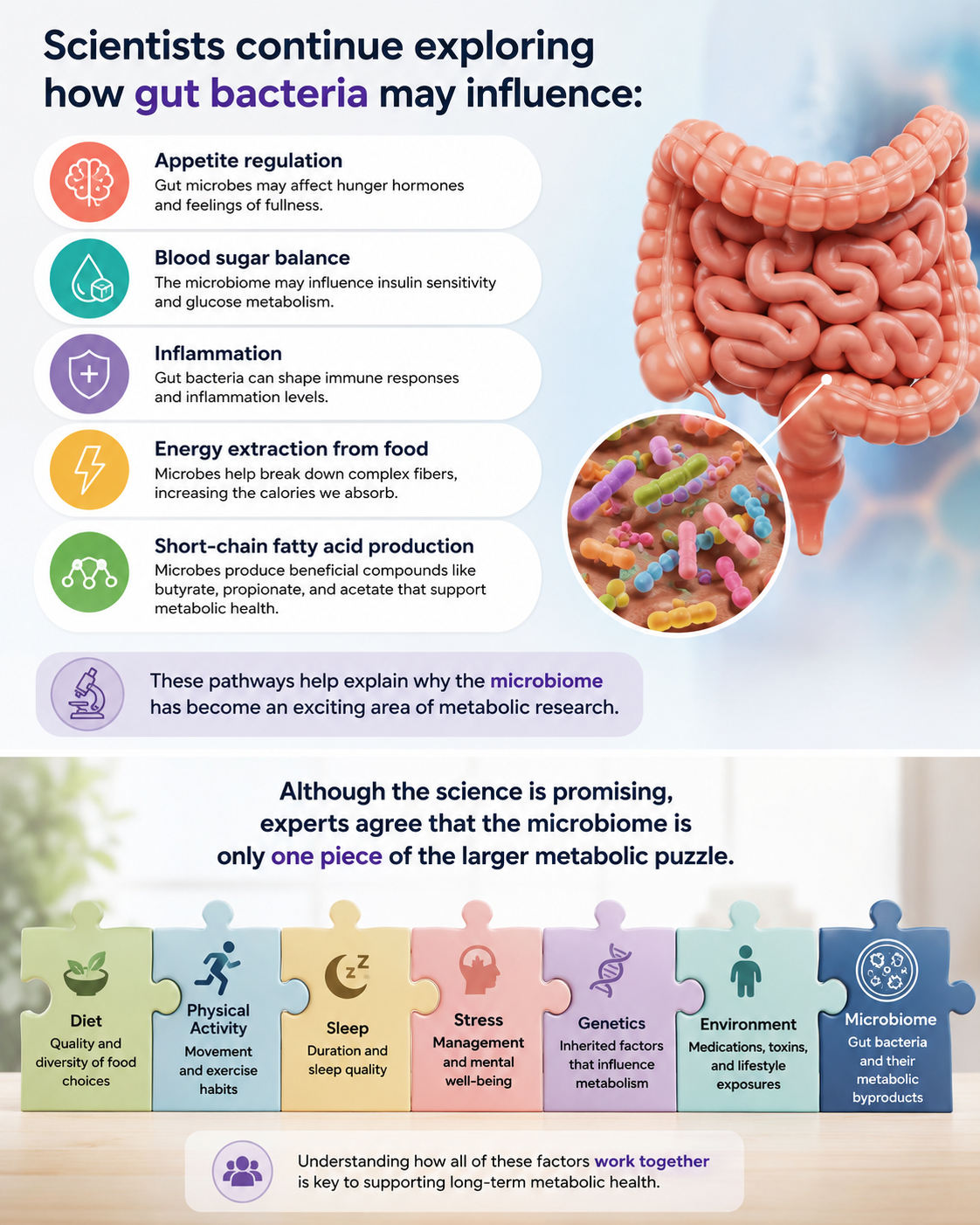
Scientists continue exploring how gut bacteria may influence:
• Appetite regulation
• Blood sugar balance
• Inflammation
• Energy extraction from food
• Short-chain fatty acid production
These pathways help explain why the microbiome has become an exciting area of metabolic research.
Although the science is promising, experts agree that the microbiome is only one piece of the larger metabolic puzzle.
The Gut Microbiome and Metabolic Health: A Growing Area of Scientific Discovery
Over the past two decades, scientists have dramatically expanded our understanding of the human gut microbiome—the vast community of trillions of bacteria, fungi, viruses, and other microorganisms that live primarily within the digestive tract. Once thought to play only a role in digestion, the gut microbiome is now recognized as an active participant in many biological processes that influence overall health.
One of the most exciting areas of research explores how the gut microbiome may affect metabolism. Metabolism is far more than the number of calories we burn each day. It represents an interconnected network involving hormones, immune signaling, nutrient processing, energy production, and communication between multiple organs. Emerging evidence suggests that the microorganisms living inside the intestine may interact with many of these systems.
Researchers continue investigating several important pathways.
Appetite Regulation
Certain gut bacteria may influence hormones involved in hunger and fullness, including glucagon-like peptide-1 (GLP-1), peptide YY (PYY), and ghrelin. These signaling molecules help communicate between the digestive tract and the brain, affecting when we feel hungry and when we become satisfied after eating.
Scientists believe that a diverse microbiome may help support healthier appetite regulation, although individual responses vary considerably. Diet, sleep, physical activity, medications, genetics, and overall health all contribute alongside the microbiome.
Blood Sugar Balance
The gut microbiome may also influence how the body responds to carbohydrates and regulates blood glucose levels.
Researchers are studying whether certain bacterial communities are associated with improved insulin sensitivity and healthier glucose metabolism. Some studies suggest that individuals with greater microbial diversity may experience more favorable metabolic responses, although this relationship remains complex and continues to be investigated.
Importantly, blood sugar regulation depends on many factors, including nutrition, muscle mass, body composition, physical activity, sleep quality, stress, liver function, and pancreatic health. The microbiome represents one component within this much larger system.
Inflammation
A healthy intestinal barrier helps separate beneficial microbes from the bloodstream while allowing nutrients to be absorbed efficiently.
When this barrier becomes disrupted, inflammatory signals may increase throughout the body. Researchers continue exploring how gut bacteria interact with the immune system and whether changes in microbial balance influence chronic low-grade inflammation, which has been associated with obesity, insulin resistance, cardiovascular disease, and other chronic conditions.
Although many questions remain unanswered, maintaining gut health through a balanced lifestyle may help support normal immune function.
Energy Extraction from Food
Not every calorie consumed is processed in exactly the same way.
Certain gut bacteria possess specialized enzymes capable of breaking down dietary fibers and other complex carbohydrates that human digestive enzymes cannot digest independently. During this process, microbes can extract additional energy from food while producing compounds that may benefit the host.
Scientists continue examining how differences in microbial composition may contribute to variations in energy utilization between individuals. However, current evidence does not support the idea that gut bacteria alone determine whether someone gains or loses weight.
Short-Chain Fatty Acid Production
One of the microbiome’s most valuable functions is the production of short-chain fatty acids (SCFAs), including acetate, propionate, and butyrate.
These molecules are produced when beneficial bacteria ferment dietary fiber. SCFAs serve numerous biological roles, including supporting intestinal cells, helping maintain the gut barrier, influencing immune regulation, and participating in metabolic signaling throughout the body.
Increasing dietary fiber intake through vegetables, fruits, legumes, whole grains, nuts, and seeds may encourage greater production of these beneficial compounds.
The Bigger Picture
The rapid growth of microbiome research has transformed our understanding of human biology. Rather than viewing metabolism as a process controlled by a single organ or hormone, scientists increasingly recognize it as an interconnected network involving the gut, brain, liver, muscles, immune system, endocrine system, and cardiovascular system.
The microbiome represents an important part of this network—but it is not the entire story.
Healthy metabolism is influenced by consistent nutrition, regular physical activity, restorative sleep, stress management, adequate protein intake, cardiovascular fitness, muscle health, genetics, age, medications, and preventive healthcare.
Current research is promising, but experts generally agree that no single probiotic, supplement, or dietary strategy can replace these broader lifestyle foundations.
Instead, the most effective long-term approach combines healthy daily habits with a diet rich in minimally processed foods and fiber, helping support both the microbiome and the body’s larger metabolic system. As research continues to evolve, the gut microbiome will likely remain one of the most fascinating frontiers in preventive medicine and systems biology, offering new insights into how the smallest organisms within us contribute to lifelong health.
#GutMicrobiome #MetabolicHealth #LeanBiome #NutritionScience #PreventiveMedicine #HealthyGut #BloodSugar #Wellness #DigestiveHealth #Research

Why Modern Food Environments Make Healthy Eating So Difficult
Modern food environments constantly compete for our attention. Highly processed foods are carefully engineered to be convenient, intensely flavorful, and visually appealing, making them difficult to ignore. At the same time, our brains are continuously processing advertisements, social media images, food packaging, aromas, and emotional cues that can influence eating decisions long before we consciously recognize them. This interaction between external food cues and the brain’s reward system helps explain why cravings often occur even when the body does not require additional energy.
Scientists studying nutrition and neuroscience have found that appetite is regulated by a complex network involving the brain, gut hormones, blood sugar, sleep, stress, emotions, and the surrounding environment. Hunger is therefore not determined solely by an empty stomach. Poor sleep, chronic stress, frequent exposure to ultra-processed foods, and constant food marketing may all increase the desire to eat by activating reward pathways within the brain.
Understanding these influences allows us to make more intentional choices. Building meals around protein, fiber, and minimally processed foods, maintaining consistent sleep, managing stress, and creating a healthier food environment at home can help reduce unnecessary cravings. Rather than relying solely on willpower, long-term success often comes from designing daily habits that support both brain health and metabolic regulation. Small environmental changes, repeated consistently, can make healthy eating feel more natural and sustainable over time.
Understanding how modern food environments influence appetite is the first step toward making healthier choices. Explore practical, science-informed strategies that can help support balanced eating habits, reduce unnecessary cravings, and promote long-term metabolic health through sustainable lifestyle changes.