
Metabolism Is More Than Calories
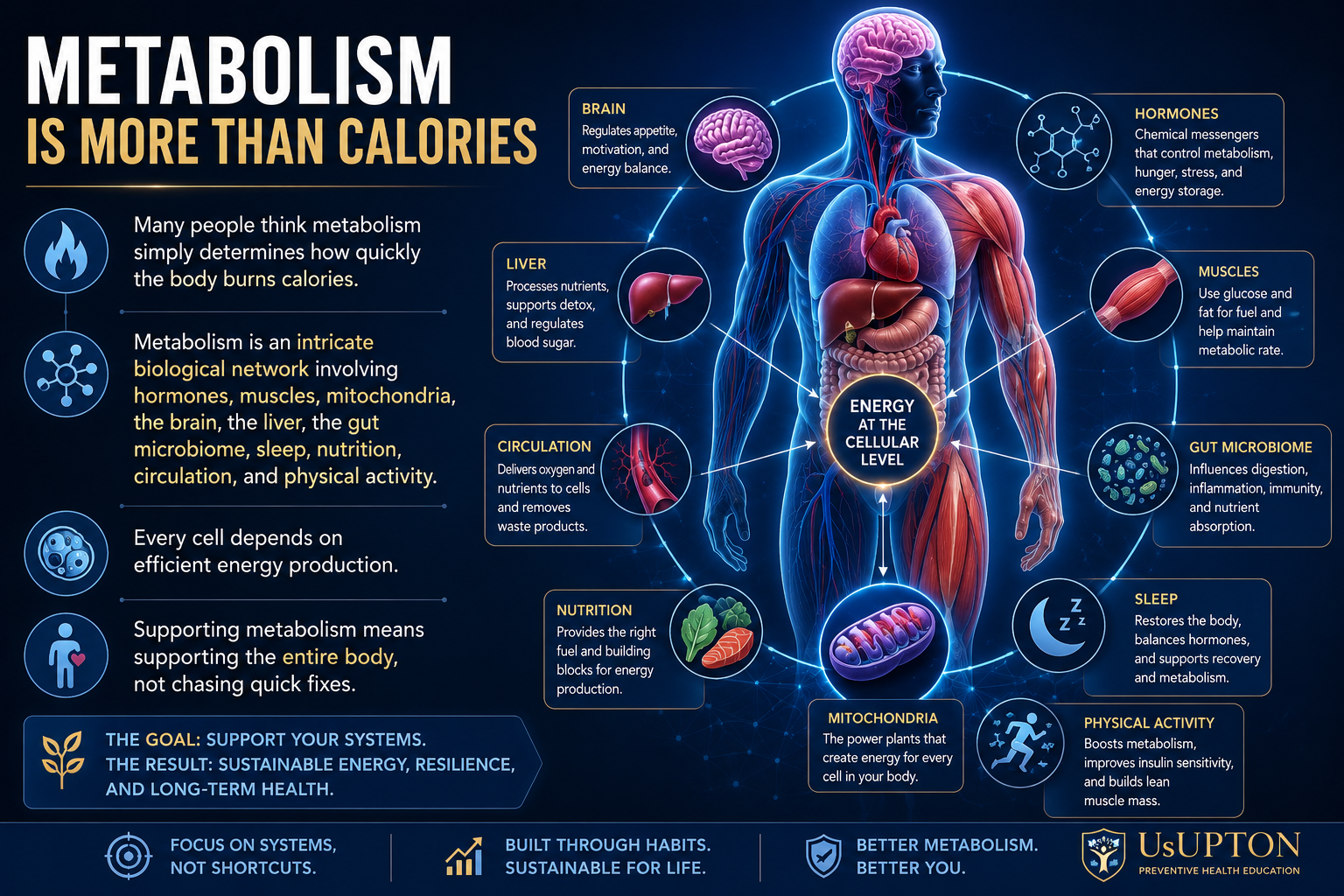
Many people think metabolism simply determines how quickly the body burns calories.
Metabolism is an intricate biological network involving hormones, muscles, mitochondria, the brain, the liver, the gut microbiome, sleep, nutrition, circulation, and physical activity.
Every cell depends on efficient energy production.
Supporting metabolism means supporting the entire body, not chasing quick fixes.
Metabolism Is More Than Calories
For many years, metabolism has often been simplified to a single question: How many calories does your body burn each day? While calorie expenditure is certainly one aspect of metabolism, modern science shows that the reality is far more complex. Metabolism is not a single process or a single organ. Instead, it is a highly coordinated biological network responsible for converting nutrients into energy, maintaining cellular function, supporting tissue repair, regulating hormones, and sustaining every organ system throughout life.
Every second, trillions of cells rely on metabolism to generate the energy needed to survive. This energy is produced primarily inside tiny cellular structures called mitochondria, often referred to as the “powerhouses” of the cell. Mitochondria transform nutrients from food into adenosine triphosphate (ATP), the body’s universal energy currency. Without efficient ATP production, muscles cannot contract, neurons cannot communicate, the heart cannot beat effectively, and organs cannot perform their daily functions.
Metabolism therefore extends far beyond weight management. It supports nearly every aspect of human physiology.
Numerous biological systems work together to regulate metabolism.
Hormones serve as chemical messengers that coordinate energy storage and energy use. Insulin helps move glucose into cells, thyroid hormones influence metabolic rate, cortisol responds to stress, and other hormones continuously adjust metabolism according to the body’s changing needs.
The brain also plays a central role. Specialized regions within the hypothalamus constantly monitor hunger, fullness, blood sugar, temperature, and energy balance. Signals from the digestive system, fat tissue, and circulating hormones help the brain decide when to increase appetite, conserve energy, or promote physical activity.
The liver acts as one of the body’s primary metabolic control centers. It stores glycogen, regulates blood glucose, processes fats, detoxifies harmful substances, and produces many proteins essential for normal physiology.
Muscle tissue is another major metabolic organ. Skeletal muscles consume significant amounts of glucose during movement and contribute greatly to insulin sensitivity. Maintaining healthy muscle mass through resistance training and regular physical activity supports long-term metabolic resilience, especially during aging.
Scientists are also discovering the important role of the gut microbiome. Trillions of microorganisms living within the digestive tract participate in fiber fermentation, short-chain fatty acid production, immune regulation, and communication with both the brain and endocrine system. Although research continues to evolve, the microbiome appears to be one important contributor within the broader metabolic network.
Lifestyle habits strongly influence how efficiently these systems function.
Sleep allows the body to restore hormonal balance, repair tissues, and regulate appetite-related hormones. Chronic sleep deprivation has been associated with increased hunger, reduced insulin sensitivity, and altered energy regulation.
Nutrition provides the raw materials needed for energy production. A balanced dietary pattern emphasizing protein, dietary fiber, healthy fats, whole grains, fruits, vegetables, and minimally processed foods helps support healthy metabolic function while supplying essential vitamins and minerals.
Physical activity stimulates muscles to use glucose more effectively, improves cardiovascular health, supports mitochondrial function, and enhances overall metabolic flexibility. Even simple activities such as walking after meals or reducing prolonged sitting can positively influence metabolic health.
Healthy circulation is equally important because oxygen and nutrients must be efficiently delivered to every tissue while waste products are removed. Good cardiovascular function helps sustain energy production throughout the body.
Perhaps most importantly, metabolism adapts continuously to the environment. Stress, illness, aging, dietary patterns, physical activity, and sleep quality all influence how efficiently the body manages energy. This remarkable adaptability explains why metabolism cannot be understood through calories alone.
Supporting metabolism is therefore not about finding a single “metabolism booster” or following an extreme diet. Sustainable metabolic health develops through consistent daily habits that strengthen the body’s interconnected biological systems.
When we view metabolism through the lens of systems biology, our goal shifts from simply burning more calories to creating a healthier, more resilient body. By supporting hormones, muscles, mitochondria, brain function, sleep, nutrition, circulation, and the gut microbiome together, we create the conditions for stable energy, improved physical performance, healthy aging, and long-term wellness. True metabolic health is built through consistency—not quick fixes.
#Metabolism #PreventiveMedicine #SystemsBiology #HealthyAging #Nutrition
How the Metabolic Reset Flow Works
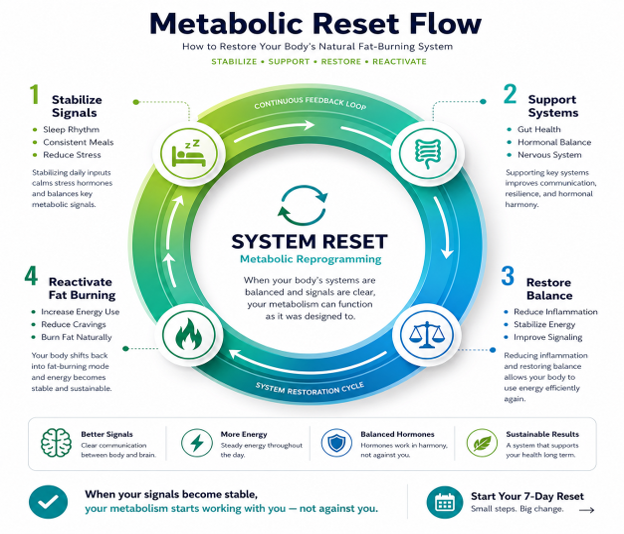
Metabolic health is not restored through a single supplement, extreme diet, or short-term challenge. Instead, it develops through consistent support of the body’s interconnected biological systems. The Metabolic Reset Flow illustrates a systems-based approach that focuses on improving the signals controlling energy production rather than simply reducing calories.
The journey begins by stabilizing the body’s daily rhythms. Consistent sleep, balanced meals, hydration, regular movement, and stress reduction help establish healthier hormonal and metabolic signals. These daily habits create the foundation upon which every other metabolic process depends.
Next comes supporting the body’s core systems. Healthy metabolism relies on coordinated communication between the gut microbiome, hormones, brain, nervous system, muscles, liver, and mitochondria. When these systems function together, the body can regulate energy more efficiently and respond better to changing demands.
The third stage focuses on restoring metabolic balance. Better blood sugar regulation, healthier inflammatory responses, improved circulation, and stronger cellular energy production allow the body’s natural metabolic flexibility to recover. Rather than forcing fat loss, the goal is to create an internal environment that supports efficient energy use.
Finally, the body can begin reactivating sustainable fat metabolism. Stable energy levels, fewer cravings, improved appetite regulation, and healthier body composition often become easier to maintain because metabolism is working with the body instead of against it.
The Metabolic Reset Blueprint emphasizes long-term resilience rather than quick results. Small, evidence-informed lifestyle changes—practiced consistently—can help restore healthier metabolic function, improve daily energy, and support lifelong wellness. Sustainable metabolism is built one healthy habit at a time.
Understanding metabolism is only the beginning. The next step is applying practical, science-informed habits that support healthier energy production, balanced blood sugar, hormone regulation, and long-term metabolic resilience. Explore the complete Metabolism Reset Blueprint to learn how small, sustainable lifestyle changes can help your body function more efficiently every day.